
ScalingSustainableGrowthforBareNecessities
How TSBP doubled Meta investment, lifted ROAS by 45%, and pushed creative fatigue from ₹7K to ₹1L+ for India's first B-Corp certified zero-waste personal care brand.
"We've been working with the TSBP team for a while now, and they've genuinely become more than just a performance marketing agency for us. They feel like an extension of our own team; they care about the business, understand our challenges, and are genuinely invested in how we're growing and progressing.
What I've particularly appreciated is how hands-on, responsive and thoughtful they are. They don't just look at numbers; they take the time to understand the larger business and think ALONG-SIDE us.
They're also some of the loveliest people to work with; which makes a big difference when you're building a growing business.
Would highly recommend them to any founder or team looking for a performance marketing partner who truly cares about the business. My only regret was not bringing them on sooner!"
Sahar Mansoor
Founder, Bare Necessities
/ About the brand
A B-Corp built on low-waste living
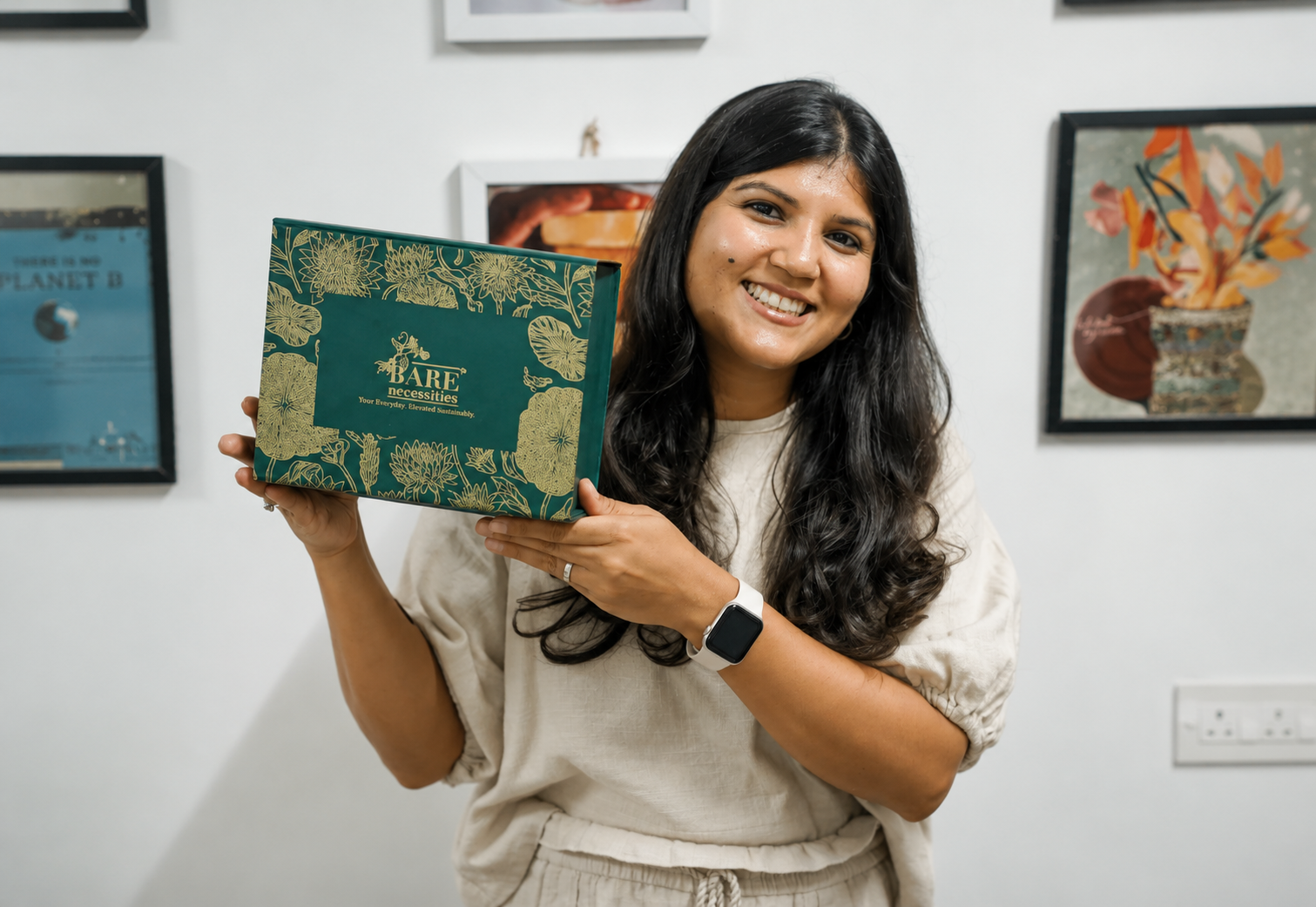
Bare Necessities is one of India's leading sustainable personal care brands and a certified B Corporation. Built on the philosophy of making low-waste living accessible, the brand offers eco-friendly alternatives across deodorants, shampoo bars, soaps, moisturisers and other personal care essentials.
As the brand gained traction, the next challenge wasn't acquiring customers — it was building a marketing engine that could scale profitably without compromising efficiency.
/ At a glance
- Founder
- Sahar Mansoor
- Certification
- B-Corp · India
- Category
- Sustainable personal care
- Range
- Deos · Shampoo · Soap · Moisturiser
/ The challenge
Strong product. Fragile scale.
Bare Necessities had a strong product offering and a loyal customer base, but scaling paid media presented several bottlenecks that stopped the brand short of its potential.
Creative fatigue at ₹7K
Winning ads consistently died at ~₹7,000 in spend. No structured testing framework meant performance plateaued fast.
Broken Meta signals
The website wasn't sending complete conversion events. Meta couldn't optimise toward high-intent buyers.
Flat AOV & repeats
Merchandising, bundles and returning-customer touchpoints were underused, capping cart value and LTV.
/ Our strategy
Build a system, not a single winning ad
Rather than chase one "winner", we designed a repeatable growth system across seven levers that compounded over the year.
1. Scalable creative engine
A structured testing framework covering angles, creator-led content, product demos, hooks and formats. Every winner became a template we iterated on.
2. Testing vs scaling architecture
New creatives were validated inside a small "test pool" before graduating into scaling campaigns. Only proven creatives got real money.
3. Scale the right products
Deodorants were the strongest organic sellers but low-ticket. We built bundles and combos around them to lift AOV without breaking acquisition.
4. Website performance
A full journey review: strategic offers, bundle placements and merchandising that lifted conversion rate and average order value.
5. Fix Meta tracking
Restored event completeness on the site. Meta immediately started identifying high-intent users and scaling winning creatives more consistently.
6. Retention & seasonal calendar
Sale windows, promo calendars and discount strategy timed to bring existing customers back, strengthening cohorts and repeat rate.
7. Google Ads & channel arbitrage
Continuous Search and Shopping optimisation, with budget shifted to Meta when it delivered stronger returns. Overall efficiency, not silo performance.
/ Campaign architecture
Test pool
Small budgets · many angles
→
Winners
Proven concepts iterated
→
Scale pool
High budget · consistent delivery
/ Results at a glance
The numbers that moved
↑ 100%
Meta ad spend
₹3L → ₹6L / month
↑ 45%
Meta ROAS
↑ 1328%
Creative scalability
₹1L+
New fatigue threshold
From ~₹7K per creative
/ Creative fatigue threshold
Average spend a winning creative sustained before dropping off.
/ Meta spend / month
/ Meta ROAS
The unlock nobody was looking at: tracking
Meta wasn't receiving complete, accurate bottom-of-funnel signals. After fixing event quality on the website, delivery moved decisively toward high-intent buyers — and winning creatives finally scaled the way the algorithm was capable of.
/ The outcome
A growth engine, not a lucky ad
By combining creative strategy, campaign restructuring, technical tracking fixes, website optimisation and retention-focused initiatives, we doubled Bare Necessities' Meta investment while improving efficiency — building a marketing system capable of sustaining larger budgets, healthier cohorts and continued growth across the brand's wider ecommerce ecosystem.
/ FAQ
Common questions
How did Bare Necessities scale Meta ad spend without losing efficiency?+
TSBP built a repeatable creative testing framework, restructured campaigns to separate testing from scaling, fixed broken Meta conversion signals, and moved budget dynamically between Meta and Google. Meta spend doubled from ₹3L to ₹6L per month while ROAS rose by 45%.
What is Bare Necessities?+
Bare Necessities is India's first B Corporation certified zero-waste personal care brand, founded by Sahar Mansoor. Its range covers deodorants, shampoo bars, soaps and moisturisers built on a low-waste philosophy.
Why was creative fatigue hitting so early?+
Winning ads fatigued around ₹7,000 in spend because there was no structured testing pipeline. Once TSBP introduced a test-then-scale campaign architecture and iterated on winning angles, the fatigue threshold pushed past ₹1L per creative.
How did fixing conversion tracking help?+
Meta wasn't receiving complete purchase and add-to-cart signals from the website. After event-quality fixes, the algorithm optimised toward high-intent buyers, cut wasted delivery, and scaled winning creatives more consistently.
What role did bundles and merchandising play?+
Deodorants were the strongest organic sellers but low-ticket. Building combos and bundles around them lifted AOV, improved profitability, and introduced customers to the wider range in a single order.
/ Related reading